Last year, I went back to working in the office full-time after years of hybrid flexibility. Suddenly, I was dressing for work five days a week again with less time in the mornings and less flexibility in my schedule.
I knew exactly what I needed: my work wardrobe system.
Not because I was starting from scratch. I have relied on systems during every demanding season of my career. I know what works when time is limited and stakes are high. So I did what I teach. Sunday planning. Outfit formulas. Strategic thinking about what the week ahead requires.
And it worked. Because systems always work when you need them most.
The Problem Most Career Women Are Actually Facing
Most wardrobe advice starts in the wrong place.
It starts with what to buy, what is trending, what pieces every woman should own. And while some of that information is useful, it does not solve the actual problem most professional women are dealing with on a Monday morning.
The problem is not what is in the closet. The problem is how you use it.
Decision fatigue is real and it starts before you leave the house. When you are standing in front of a full closet at 7am trying to figure out what to wear to a meeting you have been preparing for all week, you are spending cognitive resources you need for the actual work. That mental load compounds. By the time you walk in the door, you have already made dozens of small decisions and the day has not started yet.
The result is not just a frustrating morning. It is showing up less prepared than you should be, feeling scattered when you needed to feel grounded, and making reactive choices about your appearance when you could have made strategic ones days earlier.
A work wardrobe system solves this entirely. But first, it helps to understand what a system actually is.
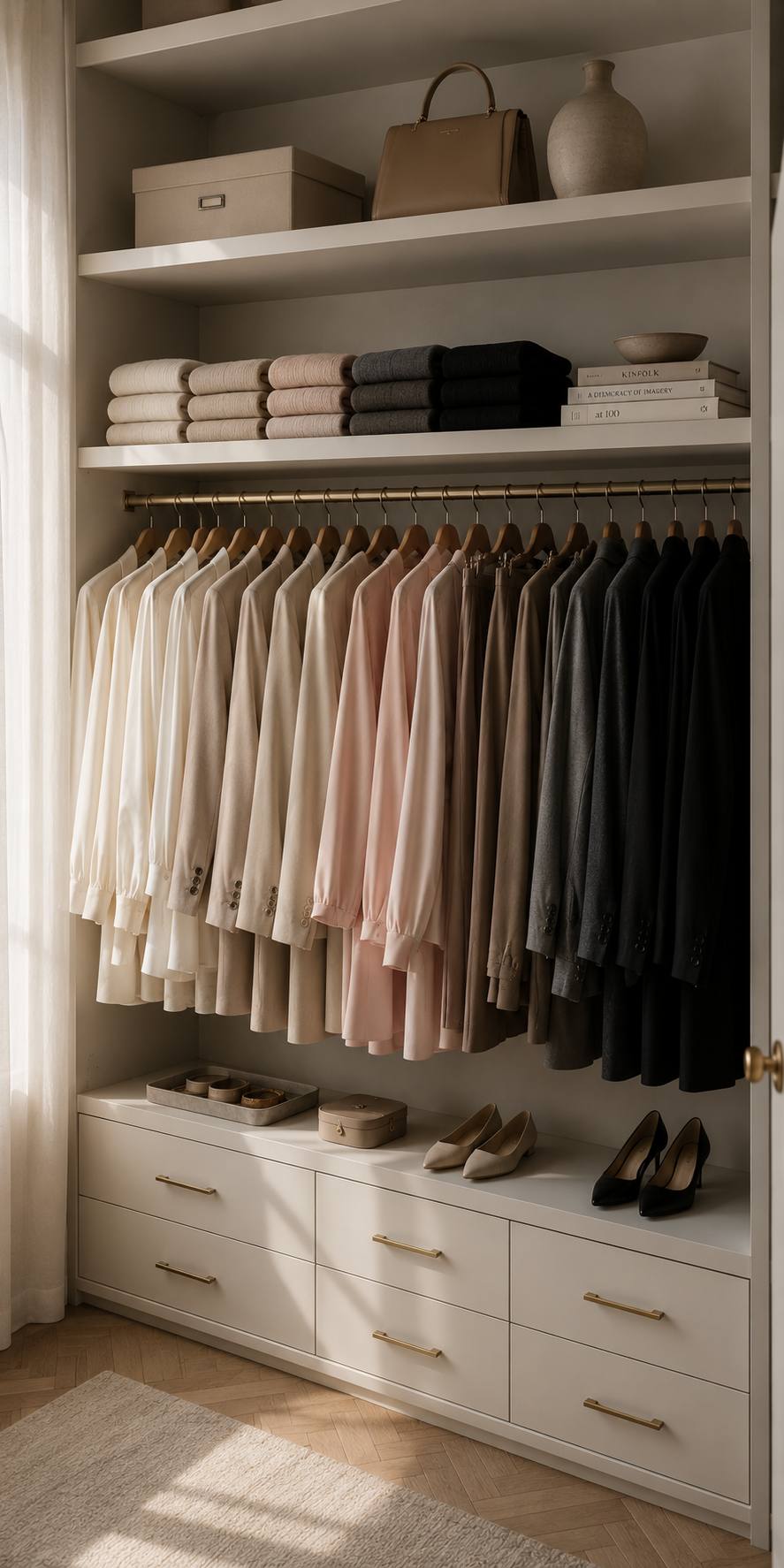
What A Work Wardrobe System Actually Is
A work wardrobe system is a repeatable framework for making clothing decisions in advance so that your mornings become execution rather than deliberation.
It has three core components working together. The first is outfit formulas. An outfit formula is not a specific outfit. It is a combination structure: a framework that tells you how to build a complete, professional look from the pieces you already own. A formula might be a fitted base layer plus tailored trouser plus one structured piece plus a shoe that closes the look. That framework stays the same. The pieces rotate. The decision is already made before Monday arrives.
The second is a planning rhythm. Specifically, a Sunday planning habit of fifteen minutes where you look at your calendar for the week ahead, identify which formula each day requires, and select the specific pieces. You make one clear-headed decision per day on Sunday when you are not rushed, not late, and not standing in front of your closet hoping something presents itself.
The third is strategic shopping. When you know your formulas, you know exactly what your wardrobe needs and what it does not. You stop accumulating pieces that go with nothing and start filling specific gaps with intention. Every purchase has a place before you make it.
Together these three components create a system that runs itself. You build it once. You refine it over time. And it delivers clarity every single week without requiring you to think about it.
What A Work Wardrobe System Is Not
This is worth clarifying because there is a lot of confusion in this space.
A work wardrobe system is not a capsule wardrobe. A capsule wardrobe is defined by a specific piece count and a restricted color palette. A system has no piece count requirement and no palette restriction. You can build a system around fifteen pieces or one hundred and fifty. The number is irrelevant. The framework is what matters.
A work wardrobe system is not a uniform. A uniform is the same outfit repeated. A system produces variety because the pieces within each formula position rotate. Two women can use the same formula and produce entirely different looks depending on what they own.
A work wardrobe system is not restrictive. It is the opposite. When the framework handles the decisions, you have more mental space for everything else. The structure is what creates freedom, not what limits it.
And a work wardrobe system is not about buying more. In most cases, professional women already own enough to build a working system. What they are missing is the framework that makes what they own functional.
The Core Components In Practice
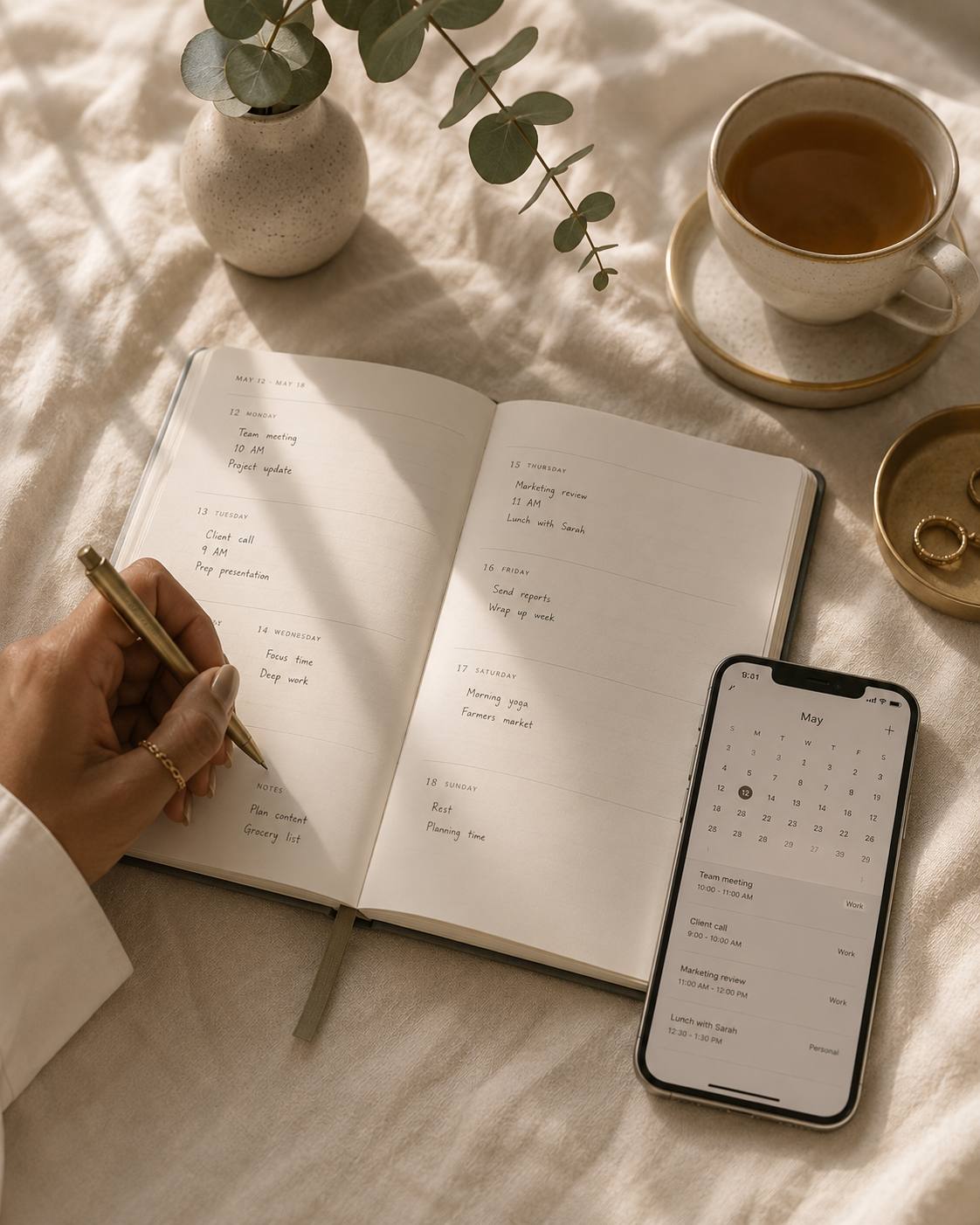
Sunday planning (fifteen to twenty minutes) Every Sunday, review your calendar for the week ahead. Identify what each day requires: internal meetings, client-facing moments, high-stakes presentations, lower-key working days. Select the formula each day calls for and identify the specific pieces. Hang them or set them aside. Monday through Friday you are not deciding. You are executing.
Outfit formulas (five to seven combinations) Build formulas that map to your actual work contexts. Start with three. Your default formula for standard meeting days. Your authority formula for high-visibility moments. Your working day formula for deep execution days when comfort matters alongside professionalism. Add formulas as your contexts require them.
Strategic shopping (filling gaps intentionally) Once your formulas are built, your shopping list writes itself. You are not browsing for inspiration. You are identifying which formula positions are currently unfilled and finding the specific piece that fills them. Nothing else makes it into the cart.
Weekly execution (no daily decisions) The planning is done. The formulas are set. The morning becomes a three-minute operation rather than a fifteen-minute ordeal. You walk in composed because the composure was built into the system days earlier.
How Systems Differ from Outfit Inspiration
Outfit inspiration requires a decision. You see something, you assess whether you can recreate it, you figure out if you own the pieces, you decide whether it works for your day. That is four decisions before you have even opened your closet.
A system eliminates decisions. The formula is the answer. The Sunday planning is the only decision point and it happens once, from a clear headspace, for the entire week.
This distinction matters because most professional women are turning to inspiration when what they actually need is a system. Inspiration is useful when you have time to think. A system is what you need when you do not.
When You Need A System Most
A work wardrobe system delivers the most value during demanding seasons. When you are preparing for a promotion. When you are navigating a role transition. When you return to office after remote or hybrid work. When you take on higher visibility responsibilities. When your schedule leaves no room for morning decisions.
These are exactly the moments when most professional women abandon their wardrobe thinking entirely and default to whatever is clean. Which is precisely when showing up with intention matters most.
If you are in one of those seasons right now, building your system is not a nice-to-have. It is how you protect your energy and your presence at the moments that count.
How to Start
Start with three formulas. Not seven. Not ten. Three that cover your most frequent work contexts. Write each one as a framework, not as specific pieces. Then identify which pieces from your current wardrobe slot into each position.
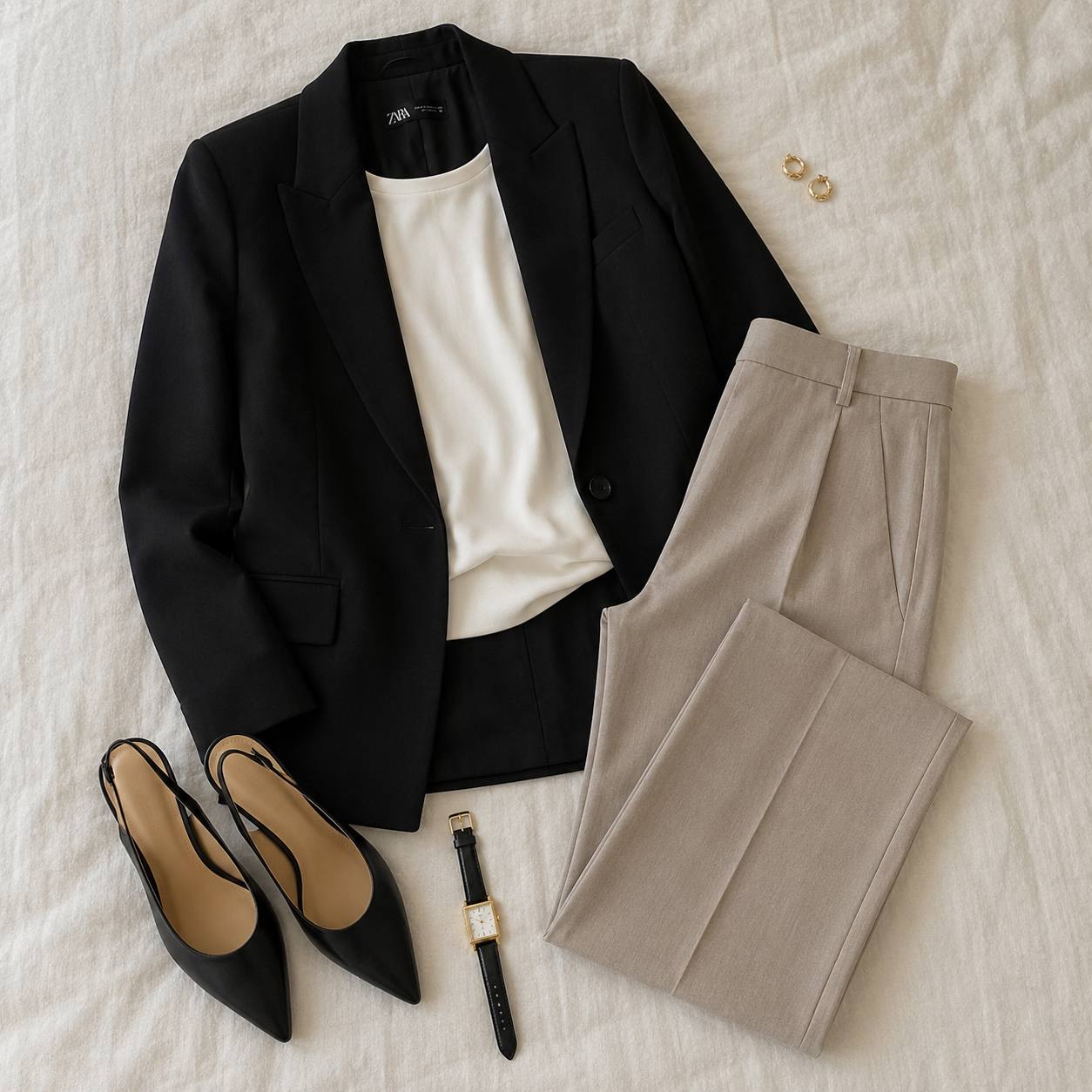
Plan one week ahead. This Sunday, spend fifteen minutes looking at your calendar and selecting an outfit for each day using your three formulas. Execute the plan. Refine based on what you learn.
Add formulas as you need them. The system grows with your work life. It is not something you build once and never touch. It is something you return to every demanding season because you already know it works.
Ready to Build Yours?
Download Simply Styled for Work for five outfit formulas you can start using this week. Free, link here.
If you’re ready to build the full system, including the planning rhythm, the formula library, and the strategic shopping framework, Style in Twenty walks you through the entire methodology. Link here.